

When you decide to build a pool, many construction problems will show up long before you start digging.
That is why we design every pool in 3D before we price it so that you can see your pool in your own yard first. You can stand at your back door on screen and see how the deck, the steps, and the house fit together.
This guide covers seven costly mistakes 3D design catches, how it helps with finishes, three things it misses, and what to ask.
What Is 3D Pool Design?
3D pool design is a computer model of your future pool and backyard, drawn to scale on your measured lot. The software turns a flat plan into a model you can spin, zoom, and walk through on a screen.
Jason builds every design in Pool Studio, professional software that Structure Studios makes for pool builders. It draws the plan in 2D, shows it in 3D, and models the deck, pergolas, and other features around the pool.
While a pretty drawing can show your backyard dream, a scaled design shows a plan you can build. The difference is the tape measure: we measure your yard first, then design to those exact numbers.
What you check | Flat sketch | 3D design |
|---|---|---|
Drawn to your real yard size | Sometimes | Yes |
View from your kitchen window | No | Yes |
Shows the slope of your yard | Rarely | Yes |
Shows room for chairs and a grill | No | Yes |
Shows how steps and deck connect | No | Yes |
Why Does a Mistake on Screen Cost Less Than One in the Dirt?
Every pool decision costs more to change as construction moves forward. Moving a pool two feet takes seconds on screen, but it means new excavation after the dig and may be impossible once the shell goes in.
The FTC guide on hiring a contractor explains that a change order is a written change to your contract. A change order can raise your price and push back your schedule, so the best one is the one you never need.
Imagine if a family approves a flat sketch, then finds out on dig day that the pool blocks the shed path. Now they must deal with the mistake or pay to fix it, when a 3D model would have shown that path on day one.
Which 7 Costly Mistakes Does 3D Pool Design Catch?
1. A Pool That Swallows the Yard
A pool drawn on paper feels smaller than the same pool sitting in a real backyard. A 14 by 28 pool sounds modest until you add a deck, chairs, a grill, and concrete decking around it.
3D design shows the whole yard, so you see where the lounge chairs go and how much grass is left for the kids. If you want a spa, we usually suggest a separate spa that stays open all winter, and the model shows where it fits.
Deck size also drives your budget, even though our fiberglass and vinyl liner prices include 3 feet of concrete around the pool. Extra decking runs $17 to $21 per square foot, so each added 100 square feet costs about $1,700 to $2,100.
That is why a finished backyard price tells you more than a pool-only number, and why 3D lets you size and price the deck once.
2. Building Too Close to a Property Line or Easement
Every city sets rules for how close a pool can sit to property lines, houses, and utility easements. If the layout breaks those rules, the permit stalls, or an inspector finds the problem after the dig.
The City of Tulsa site plan guidebook lists what a home permit needs, including a site plan and a signed statement about easements. Rules also change from Tulsa to Broken Arrow, Jenks, Bixby, and Owasso, and our guide to Tulsa pool permits covers each city.
We draw your property lines and easements into the model, so setback issues show up on screen before the city sees them. The finished layout also holds the measurements the permit office asks for, such as the distance from the pool to the street.
3. Hitting a Buried Line or Building Under a Power Line
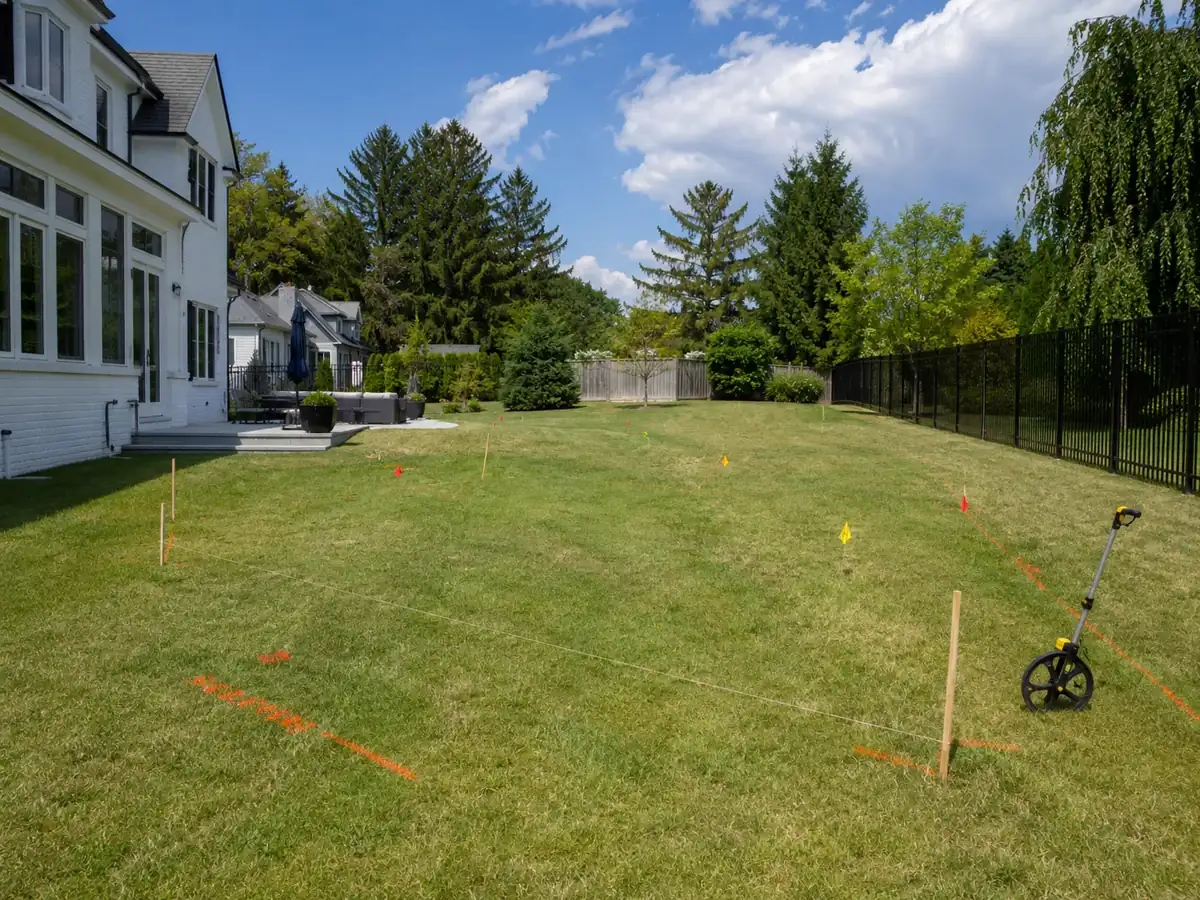
Your yard may hide gas, water, cable, and power lines, and digging in the wrong spot can damage any of them.
Oklahoma law requires a free locate request through OKIE811 before anyone digs, and we file that request on every job. Utility crews then mark the buried lines with paint and flags so the dig stays clear of them.
Overhead power lines need the same care as buried ones, and the National Electrical Code sets overhead clearance rules for pools. Power lines must sit at least 22.5 feet above the water, and that limit extends 10 feet past the pool edge. We add overhead lines to the model so the pool never lands under one, then we check the layout again against the 811 marks.
4. A Pool You Cannot See From the House
If you plan to watch the kids from the kitchen, a pool hidden behind a corner of the house becomes a supervision problem.
We can put the camera at your back door and kitchen window, so you see the view you will live with daily. We move the pool on screen until that view works for your family.
A clear view of the pool helps, but does not replace safety gear around the water. The CPSC barrier guidelines point out that barriers are not childproof. Fences, gates, cameras, and alarms will buy time, but having an adult watch the pool beats anything else.
5. Steps and Entry in the Wrong Spot
Where you place the pool steps decides how your family uses the pool. Steps on the far side of the pool turn every trip from the house into a long walk across a hot deck. Steps beside a tight deck make people squeeze past chairs to get in.
Families with pets should think carefully about where the entry steps will go. We tell dog owners to choose a fiberglass shell or vinyl pool with the steps closest to the house, or design a gunite pool with this in mind.
In 3D, you can swap a fiberglass model, flip it, or turn it, and see where the steps land each time. That choice takes a minute on screen, but you cannot change it after the shell is in the ground.
6. Missing the Slope
Many Tulsa backyards have more slope than they seem to have from the patio. A two-foot drop across a yard looks small on paper, but when you start digging, it can decide whether you need a retaining wall.
On our pool builds, a retaining wall and backfill for a full inground pool can run $10,000 to $15,000, a hard number to learn after signing.
A 3D design shows the grade, so you see where the pool meets the ground on every side. On many sloped lots, we point families toward a semi-inground pool set deeper on the high side. We also place fiberglass and gunite pools on slopes, and we measure every yard on site because there is no single slope cutoff.
 Want to know what your yard can hold?Get My Free Yard CheckJason calls first to set a time. Your yard notes arrive within a day.
7. Equipment and Skimmers in the Wrong Place
The equipment pad needs a planned spot, just like the pool. A pad far from your home means long pipe runs and higher electrical cost, while a pad beside the patio becomes the thing everyone stares at.
Skimmer placement matters, too. We set skimmers on the northwest side based on Oklahoma wind patterns, so the wind carries debris toward the skimmer instead of away from it.
Because we mark the skimmer and pad on the model, you know what you'll see from your chair before any pipes go in.
Can You Choose Finishes in 3D Before You Build?
Finishes change a pool's look more than most families expect. A tile chip in your hand looks different from a full row of tile at the waterline. Coping, decking, and rock work also shift the look once they sit together.
Pool Studio lets us swap materials right on your model so that you can compare options on your own pool instead of in a catalog.
Every fiberglass pool we build gets waterline tile. We install both glass and porcelain tile, and you can pick the color while seeing it against the shell and deck.
On a semi-inground pool, the exposed wall gets a rock or decorative brick finish, and the model shows how it looks from the patio.
Changing a finish on screen costs nothing, but changing it after the tile is set means tearing it out and paying twice.
What Does a 3D Pool Design Miss?
A 3D model shows what sits on top of the ground, but it cannot show what lies under it. You deserve to know these three limits before you sign a construction contract.
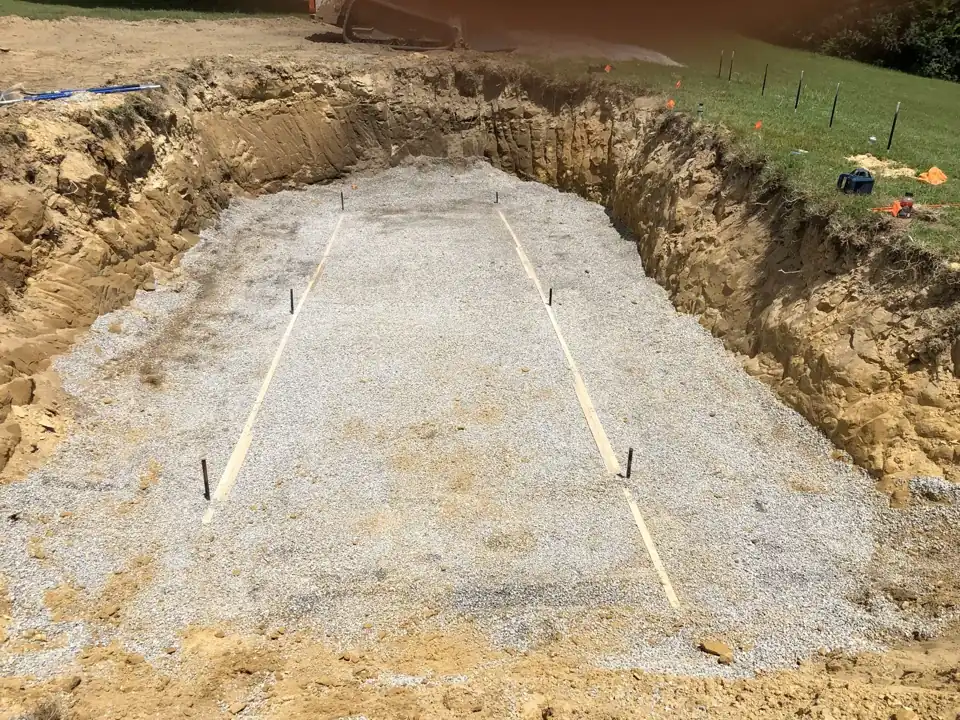
- Buried rock. Tulsa ground can hide rock that a 3D design cannot show. Your quoted price is fixed, with one exception: if the excavator hits buried rock, the price can move.
- Weather. Heavy rain can fill an open dig and slow the work, but it costs you time rather than added dollars on your contract.
- The mess. During the build, your yard will look ten times worse than you picture, and no model shows that. We try to barricade the work area so pets stay out of the dig.
A design never replaces a yard visit, so we still measure the property and check how equipment will get in. You only need a crane for fiberglass when the shell has to be lifted over the house.
How Does Our 3D Design Process Work?
- Free site visit. We spend about an hour in your yard measuring, checking the slope, and assessing access.
- Jason builds the 3D design. His model shows the pool, deck, steps, equipment, and your house.
- You review it with Jason. You spin the model, look from the back door, and ask for changes.
- We revise until it fits. Changes on screen are fast and cheap, so this is the right time to make them.
- We price the design. Because we design first, the price matches the plan you saw. Permits, electrical, and dirt hauling sit outside our pool prices, so we walk through those costs before you sign.
The 3D design has a fee, and when work starts, we credit that fee toward the final cost of your pool. You pay once for a plan that keeps the costly surprises on the screen instead of in your yard.
What Should You Ask Before You Approve a 3D Design?
- Is this design drawn to my real yard measurements?
- Does the model show my property lines and easements?
- Can I see the pool from my kitchen window and back door?
- Where are the steps, the skimmer, and the equipment pad?
- How does the pool meet the ground if my yard slopes?
- How much deck is included, and where will the furniture go?
- What could change the price after the dig starts?
A good builder can show you each answer right on the screen.
 Talking to pool builders soon?Get the ChecklistSeven questions to ask before you sign. Free to print.
What I Recommend
Don't approve a pool you've only seen from above. I design every pool we build myself, so the person drawing your pool knows exactly how it gets built. Ask me to put the camera where you'll stand, like the kitchen sink, the back door, or the chair you'll sit in every evening.
Bring the whole family to the review, and then take a day before you say yes. A pool will shape your family's summers for years, so those extra minutes on the design are the cheapest time you'll spend.
Frequently Asked Questions
Is 3D pool design worth it?
Yes, for most families. A 3D design lets you catch size, setback, slope, and layout mistakes before the dig. Moving a pool on screen takes seconds. Moving it after the dig costs real money, and it may be impossible once the shell is set.
Can I design my own pool in 3D online for free?
Free online tools can help you collect ideas, but they are not drawn to your measured lot. They also do not show your easements or slope. Bring your ideas to a builder who will measure your yard and design to those numbers.
Does a 3D pool design lock in my price?
We price from the 3D design, and your quoted price is fixed. The one exception is buried rock, because if the excavator hits buried rock, the price can move. Rain and permit delays cost time, not added dollars on your contract. Permits, electrical, dirt hauling, and any crane service sit outside our pool prices.
Can 3D design help with a sloped yard?
Yes. The model shows where the pool meets the ground on every side, revealing whether you need a retaining wall or a semi-inground pool. We measure every sloped yard on site because there is no single slope cutoff.
Does Silverado Rock charge for 3D pool design?
Yes. The 3D design has a fee, and when work starts, we credit that fee toward the final cost of your pool. The site visit before the design is free and takes about an hour.
Is a 3D pool design the same as a pool visualizer?
No. A visualizer places a picture of a pool into a photo of your yard to help you dream. A 3D design is a scaled plan of your real yard that helps you build.
Design the Pool That Fits Your Yard
The right pool is the one your kids race to every evening, not the one that looked best in a brochure. Whether fiberglass, gunite, or semi-inground, the best choice fits your yard, your budget, and how your family lives. Take our perfect pool quiz to find the one that matches you.