

Choosing between a saltwater pool and a traditional chlorine pool in Tulsa comes down to upfront costs, maintenance routines, and how the water feels during Oklahoma’s hot summers.
Picture a warm July evening in Tulsa with the whole family outside. Whatever pool type you like, the dream looks about the same. The kids beg for ten more minutes in the water, and nobody climbs out with red, stinging eyes.
That picture is the reason most families ask us about saltwater, and it is a wonderful goal. Salt isn't the only way to reach it, though, and it isn't always the most practical.
Chlorine, salt, and Pristine Blue all keep pool water clean and safe. Each one asks something different of your wallet, your weekends, and your patience. This post walks through all three options in plain language. You will see what each one costs on a new build and what tends to go wrong. You will also see how Oklahoma heat, sun, and winter change the whole picture.
We install every option in this article, so this is not a pitch for one system. It is the same honest conversation we have with families at their kitchen tables.
Is a Saltwater Pool Chlorine-Free?
No, and this is the single biggest myth we hear from families.
Many people tell us they want salt because they hate chlorine. A salt pool is still a chlorine pool, though, and that fact surprises almost everyone we meet.
Pool water flows through a device called a salt cell that sits on your equipment pad. An electric charge inside the cell splits the dissolved salt and turns it into chlorine. That chlorine cleans the water the same way chlorine from a jug does.
The water is also far less salty than most people expect. The US Geological Survey puts a salt pool at about 3,000 parts per million. Ocean water sits much higher, at about 35,000 parts per million. That makes a salt pool roughly one-twelfth as salty as the sea, so most swimmers barely taste it.
So the real choice is not between chlorine and no chlorine at all. The real choice is how chlorine gets into your water and how much work you want to do each week. That second question matters far more than most sales pitches admit.
How Each Option Keeps Your Water Clean
Every option still uses chlorine in some way, but Pristine Blue means the pool needs far less.
Traditional Chlorine
With a traditional system, you add chlorine by hand as tablets, liquid, or granules. Tablets often sit in a floating feeder and dissolve slowly over several days. You test the water, then add more chlorine whenever the levels start to drop.
Chlorine costs the least to start because it needs nothing beyond your existing pump and filter. The trade is your time, because chlorine burns off quickly during a hot Tulsa summer and demands frequent testing and adjustment.
Chlorine also needs safe storage at home in a cool, dry place, far away from kids and pets.
Saltwater
A salt system adds a salt cell to the equipment that already runs your pool. On our gunite builds, that cell is the AquaPure chlorinator, and our fiberglass pools get the Hayward AquaRite. Both run on about 3,000 parts per million of salt. The cell makes chlorine whenever the pump runs, so you set the output level and the cell doses the pool for you each day.
A salt cell can also push harder when your pool needs extra help. Both brands have a boost setting for heavy swim days, which helps after a big backyard party or a summer storm. You can also shock a salt pool with liquid chlorine, like any other pool.
The cell needs a little care, too. Jandy says purer salt helps the cell last longer, and it warns against rock salt because its impurities can shorten the cell's life. The AquaPure also cleans its own plates on a timer, which slows the scale that builds up over a summer.
A salt cell does not balance the rest of your water chemistry. That part is still your job, and it is where most salt pool surprises happen.
Pristine Blue
Pristine Blue is a copper-based algaecide made for swimming pools. Its EPA product label lists copper sulfate as the active ingredient for pools, spas, and hot tubs. The copper helps keep algae from taking hold in your water. The product is also pH neutral, so your pH stays steadier than it does in a salt pool.
Pristine Blue is not a full sanitizer, though, because its label claims algae control, not control of the germs that make swimmers sick. That is why our Pristine Blue users must still shock the pool with chlorine about twice a month.
They also test the water about twice a month, which lines up with the label's instruction to test copper every 14 days.
Pristine Blue needs no new equipment on your pad, because you pour it straight into the water. No cell to replace and no salt to manage.
Copper does come with one firm rule, since the label sets a target of 0.9 ppm and says never to go above 1.0 ppm. Too much copper can stain some pool surfaces, so follow the label and test on schedule.
Is a Saltwater Pool Healthier Than a Chlorine Pool?
A salt pool still uses chlorine, so it is not healthier for that reason. The comfort difference comes from steady chlorine levels and well-balanced water.
Most people blame chlorine itself for red eyes after a swim. The CDC says the real cause is a group of compounds called chloramines. Chloramines form when chlorine mixes with sweat, pee, skin cells, and lotion that wash off swimmers. They can irritate both the eyes and the lungs.
pH also matters a great deal for comfort, and the CDC sets a safe pH range of 7.0 to 7.8 for pools and hot tubs. Water outside that range can sting your eyes, no matter which system you run.
A salt cell makes chlorine in small, steady amounts whenever the pump runs, which avoids the spikes and dips of dosing by hand. Steady chlorine and balanced pH make the water feel softer to many swimmers.
A salt pool with drifting pH is no more comfortable than a well-run chlorine pool. The healthiest pool is the one that stays balanced, so pick the system your family will keep up with.
Salt is safer to store than a bucket of chlorine tablets. You still need to lock up the acid, though.
What Each Option Costs on a New Build in Tulsa
These are our own installed prices on a new Silverado Rock pool, not national averages pulled from a construction cost website.
Option | Added Cost on a New Build | What You Keep Buying |
|---|---|---|
Traditional chlorine | No added equipment | Chlorine all season |
Pristine Blue | No added equipment | Pristine Blue and chlorine shock |
Salt system | About $3,000 | Salt, acid, and a future cell |
Salt plus automatic acid feed | About $8,000 to $11,000 in total | Salt, acid, and a future cell |
Look closely at the last row of that table, because the acid feed is the number most saltwater sales pitches leave out.
A salt pool needs acid on a regular schedule to keep its pH in line. You can pour that acid in by hand each week, or you can install an automatic system that adds $5,000 to $8,000. Few builders mention that second number up front, and we think you should see it before you sign.
Your water system is one line in a much bigger pool budget. For the pool price alone, see our inground pool cost guide.
What would your pool cost?
Pick a pool type to start our cost calculator. It takes about 60 seconds and shows a price range for your yard.
Not sure which type? Answer three questions and we suggest one.
What Each System Asks of You Each Week
Cost is only half of this decision, because your time has real value, too. Here is what living with each system looks like during a long Tulsa swim season.
System | Hands-On Time Once Running | What You Do | Start-Up Cost |
|---|---|---|---|
Traditional chlorine | Most | Test often and add chlorine, acid, and stabilizer by hand | Lowest |
Pristine Blue | Low | Test about twice a month, add Pristine Blue, and shock with chlorine | Lowest |
Salt system | Medium | Test weekly, add acid by hand, and top up salt | About $3,000 |
Salt with acid feed | Least | Glance at the readings, refill the acid tank, and top up salt | About $8,000 to $11,000 |
Chlorine and Pristine Blue cost the least to start. A salt pool with an acid feed costs the most up front. Once it is running, though, it asks the least of you of any option.
Chlorine levels can change fast in summer heat, which is why a system that holds steady matters so much. Salt keeps chlorine steady, while Pristine Blue keeps algae away and pH stable. Pick the trade that fits your family and your budget.
No system on this list lets you walk away for a whole summer, since every pool still needs skimming, brushing, and a clean filter.
The Salt Pool Problems Most Builders Skip
A salt system is a great tool for the right family, but it brings a few problems that rarely show up in the sales pitch.
Your pH will climb. Why? Because making chlorine from salt tends to push pH upward. High pH makes chlorine work poorly and can leave the water cloudy. A salt pool needs acid every week, either by hand or from an automatic feed like the Jandy TruDose or Hayward's Sense & Dispense.
The salt cell will also need replacing, so plan for it early. Before you sign with any builder, ask what a replacement cell costs and put that number into your budget.
Salt that splashes onto stone and concrete can flake and pit the surface, and metal that is not rated for salt will corrode. Salt mist can also drift onto outdoor kitchens and AC units over time.
None of these problems is a reason to skip salt, but each one is a reason to plan carefully before the build starts.
How Oklahoma Weather Changes the Numbers
Tulsa summers are long, hot, and bright, and our winters bring hard freezes that change how every water system performs.
Sun and Heat Burn Off Chlorine
Summer 2026 averaged 84.2 degrees, the seventh-warmest Tulsa summer on that list.
Sunlight breaks down chlorine quickly, and warm water feeds algae growth. A chlorine pool in July needs more testing and more product than the same pool in May. A salt cell handles that steady summer demand better, as long as you keep pH in range. That extra summer work also adds wear to the cell.
Algae Season Has a Date
In our experience, algae season in the Tulsa area peaks during a predictable window each year. It starts about two weeks before the Fourth of July and runs into early August.
That window lines up with the hottest water of the year and the busiest swim weeks of the summer. Heavy use and warm water burn through chlorine fast, and algae take any opening they get. Plan to test more often during that stretch, no matter which system you choose.
Winter Is Hard on Salt Cells
A salt cell does not handle cold weather well. A salt cell stops making chlorine once the water turns cold in the fall. Freezing water can also badly damage the cell and its sensor.
That's another reason we push every family toward a full winter closing instead of running the pool all winter long in Oklahoma. On a salt pool, the cell should come out, get cleaned, and stay dry until spring. Our closing service starts at $350.
Which Option Fits Your Pool Type?
Salt, chlorine, and Pristine Blue can all work in any pool. The details change with the surface your water touches every day.
Vinyl liner pools. Salt at normal levels does not harm a vinyl liner. The bigger risk is chlorine set too high for too long, which can slowly fade and weaken the vinyl. If you run salt in one of our vinyl liner pools, keep the cell output low and test often. Ladder hardware and light rings should also be salt-rated.
Fiberglass pools. A fiberglass shell has a smooth gel coat finish that resists water. Salt, chlorine, and Pristine Blue all work well in a fiberglass pool, and balanced water protects that finish for years. Our fiberglass pools also come with waterline tile, which is easy to wipe clean when salt or scale builds up at the edge. To see how we set and backfill each shell, visit our fiberglass pool installation page.
Gunite pools. For a gunite pool, the interior finish matters most. Pebble Tec says plaster needs resurfacing every 5 to 10 years, while quartz finishes last about 7 to 15 years. The company also says its pebble finishes can last over 20 years with good care. On our gunite builds, a Pebble Sheen finish is an optional upgrade.
Plaster is the softest of those three surfaces, so pH that stays too low for weeks can etch it faster than the others. Whatever the finish, consistently balanced water protects your investment. Learn more in our full guide to gunite pools.
Questions to Ask Any Builder About Water Care
A good builder should answer every one of these questions without flinching, so bring this list to every consultation, including ours.
- Is this salt system paired with an automatic acid feed, or will I add acid by hand?
- What does a replacement salt cell cost, and how long should mine last?
- Are all metal parts in and around my pool rated for saltwater?
- Which stone or concrete will sit in the splash zone, and does it handle salt?
- What does it cost to close my pool for winter, and who does it?
- Would you suggest starting without salt, and if not, why not?
If a builder cannot answer these clearly, that hesitation tells you something important about how the build will go.
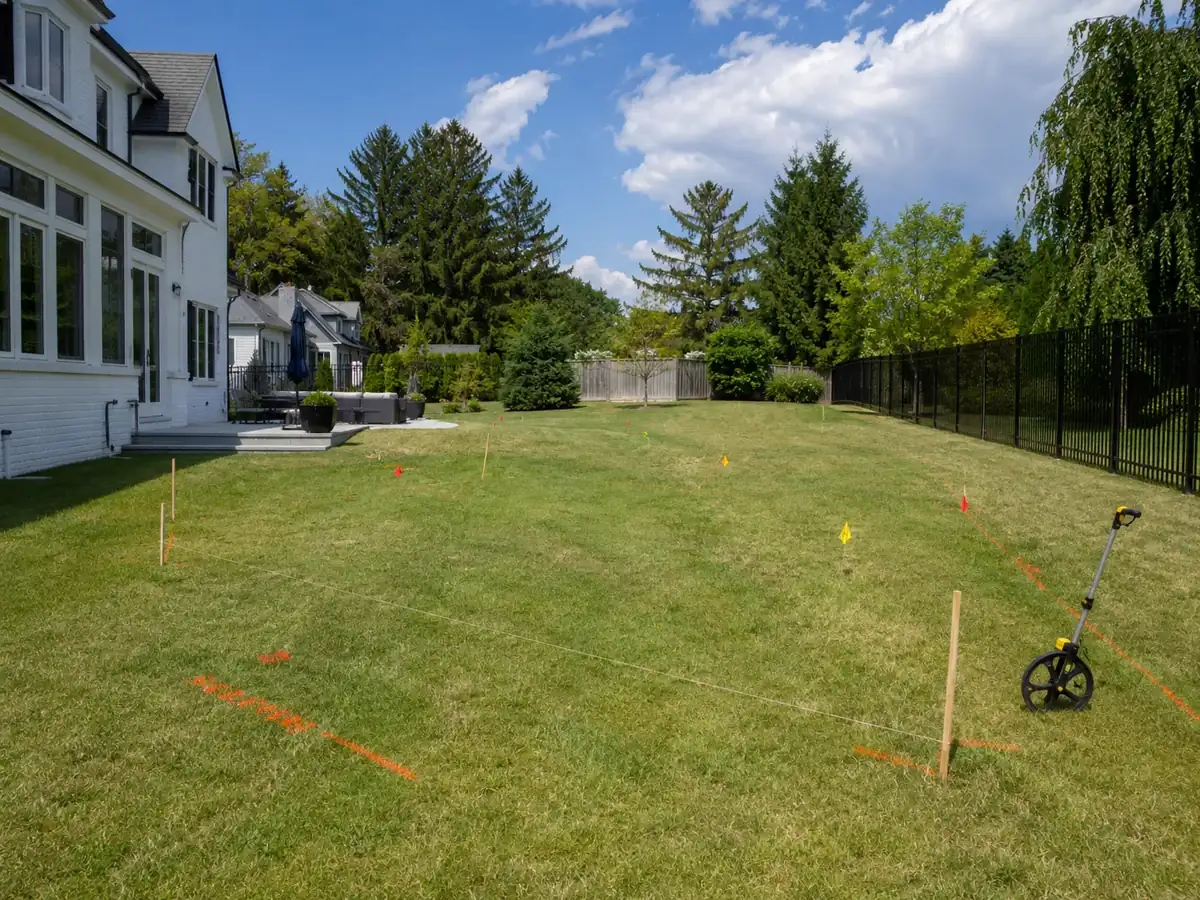 Want to know what your yard can hold?Get My Free Yard CheckJason calls first to set a time. Your yard notes arrive within a day.
Which System Is Right for Your Family?
Use this to guide your decision, and find the line that sounds the most like your family.
- Start with Pristine Blue if this is your first pool and you want light weekly work at a low start-up cost.
- Choose traditional chlorine if you want the lowest start-up cost and don't mind testing often.
- Choose salt if you dislike handling chlorine, you will test every week, and you have budgeted for acid and a future cell.
- Add the automatic acid feed if you want a salt pool that runs with the least hands-on work.
There is no wrong answer anywhere on that list. The only real mistake is buying salt because you expect zero chemistry work, since that never happens.
What I Recommend
Families tell me they want a saltwater system because they hate chlorine. I never make anyone feel bad about that, because it's the most common myth in this business.
So here's what I tell most first-time owners. Skip the salt system for now, use Pristine Blue for the first year, and keep the $3,000 in your pocket.
You'll test and shock about twice a month, while your pH stays steady and the pool can sit for weeks without turning green.
If you still want salt after a full season, we'll add it. If you want salt from day one, I'll install it right. That means pairing the salt cell with an automatic acid feed. A salt pool without a pH plan is a pool that fights you all summer.
Here's one more thing most builders won't mention: salt doesn't stay in the pool, because it splashes onto stone and concrete. Salt mist can also drift onto outdoor kitchens and AC units. I'd rather you hear that from me now than find it yourself in three years.
Whatever you pick, the goal stays the same: keep your kids in the water until the streetlights come on.
Frequently Asked Questions
Is a saltwater pool better than a chlorine pool?
It depends on how much hands-on work you want to do, because a salt cell makes chlorine for you and keeps levels steady. It costs more to start, pushes pH up, and needs a new cell someday. Chlorine costs less to start but requires more testing and manual dosing.
Does a saltwater pool still have chlorine?
Yes, because a salt cell uses an electric charge to turn dissolved salt into chlorine, and that chlorine cleans the water. You still test and balance the water, but you rarely add chlorine by hand.
How much does a salt system cost on a new pool in Tulsa?
At Silverado Rock, a salt system on a new build runs about $3,000. An automatic acid feed adds $5,000 to $8,000. These are our installed prices, not national averages.
Are saltwater pools better for skin and eyes?
They can feel softer to many swimmers because the chlorine level stays steady. The CDC says red eyes come from chloramines, not from chlorine itself—balanced pH and steady chlorine matter more than which system you choose.
What is Pristine Blue, and does it replace chlorine?
Pristine Blue is a copper-based algaecide that helps prevent algae and keeps pH steady. It does not replace chlorine, because its label covers algae, not the germs that make swimmers sick. Owners test about twice a month and shock with chlorine about twice a month.
Can I add a salt system to my pool later?
Yes. Most pools can add a salt system after the build, which is why we suggest trying Pristine Blue first. If you think you might want salt, tell your builder before the build. That way, every metal part is rated for salt from the start.
Find the Right Pool for Your Family
Your water system is one choice inside a much bigger plan, and the right pool for your yard and your family comes first.
Take our pool fit quiz and tell us how your family wants to use the backyard. We will point you to the pool type and features that fit your plans.